
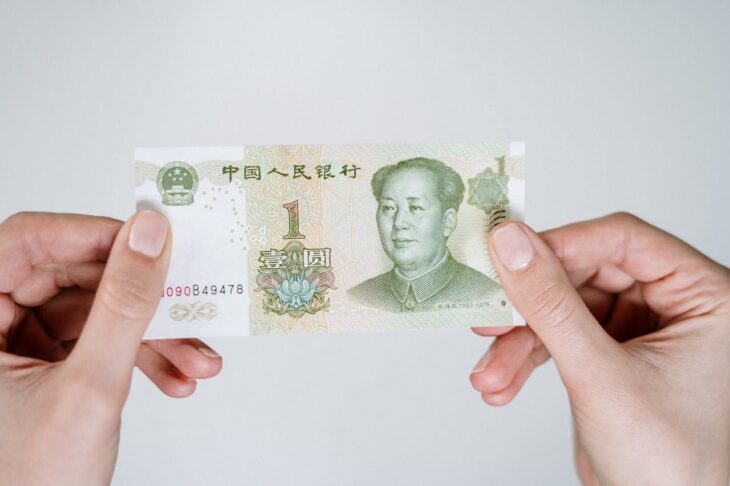
The Digital Yuan: China’s Revolutionary Approach to Money
While much of the world debates the future of digital currencies, China has already taken decisive action. The digital yuan, officially known as the e-CNY (electronic Chinese Yuan) or Digital Currency Electronic Payment (DCEP), represents one of the most advanced and ambitious central bank digital currency (CBDC) projects in the world. As the first major economy to pilot a digital currency at scale, China is not just experimenting with technology—it’s reimagining the entire financial system and potentially reshaping the global monetary order.
What Is the Digital Yuan?
The digital yuan is a digitized version of China’s official currency, the renminbi (RMB), issued and controlled by the People’s Bank of China (PBOC), the country’s central bank. Like physical cash, it is legal tender backed by the full faith and credit of the Chinese government. However, unlike the electronic payments Chinese citizens already use extensively through platforms like Alipay and WeChat Pay, the digital yuan is actual central bank money, not a claim on commercial bank deposits or private company balances.
This distinction is crucial. When you use Alipay or WeChat Pay, you’re using a private payment platform that facilitates transfers of commercial bank money. With the digital yuan, you hold a direct liability of the central bank itself, making it equivalent to physical cash in terms of legal status and security, just in digital form.
The World’s Most Advanced CBDC Pilot
China’s digital yuan project has progressed far beyond the conceptual stage. The PBOC began research on a digital currency as early as 2014, and by 2020, it had launched pilot programs in several cities including Shenzhen, Suzhou, Chengdu, and Beijing. Since then, the program has expanded dramatically.
By 2024, the digital yuan had been tested in hundreds of Chinese cities, with pilots covering both urban and rural areas. The system has processed hundreds of billions of yuan in transactions, with tens of millions of individual wallets opened and millions of merchants accepting digital yuan payments. The currency was prominently featured during the 2022 Beijing Winter Olympics, where both domestic and international visitors could use it for purchases.
The pilot programs have explored various use cases: paying government employees’ salaries, distributing stimulus payments, settling wholesale transactions between banks, and facilitating everyday retail purchases. Some cities have distributed digital yuan “red envelopes”—lottery-style giveaways designed to encourage adoption and test the system’s capacity. The scale and scope of these trials dwarf CBDC experiments in other countries, providing China with invaluable real-world data.
Technical Innovation and Design
The digital yuan employs a sophisticated two-tier system. The PBOC issues the digital currency to commercial banks and authorized payment operators, who then distribute it to the public. This approach preserves the existing banking system’s role while ensuring the central bank maintains ultimate control over monetary policy and currency issuance.
One of the system’s most impressive features is its ability to function offline. Using Near Field Communication (NFC) technology, users can transfer digital yuan between devices without an internet connection, simply by tapping phones together. This “dual offline” capability ensures the currency remains usable even in areas with poor connectivity or during network outages—a critical feature for a country as geographically diverse as China.
The digital yuan also incorporates “controllable anonymity.” Small transactions can be conducted with minimal identification, similar to cash, protecting user privacy for everyday purchases. However, larger transactions require full identity verification, allowing authorities to combat money laundering, tax evasion, and other financial crimes. This balance between privacy and oversight reflects China’s approach to governance more broadly.
Strategic Motivations
China’s push for a digital yuan is driven by multiple strategic objectives. Domestically, it addresses concerns about the dominance of private payment platforms. Alipay and WeChat Pay together handle the vast majority of China’s mobile payments, giving two private companies enormous influence over the country’s financial infrastructure and access to tremendous amounts of consumer data. The digital yuan provides a state-controlled alternative that reduces this private sector concentration.
The digital currency also enhances the government’s ability to implement monetary policy and maintain financial stability. With real-time visibility into digital yuan transactions, the PBOC could potentially respond more quickly to economic changes, combat illegal activities more effectively, and distribute fiscal stimulus with unprecedented precision and speed.
Internationally, the digital yuan could challenge the dollar’s dominance in global finance. Currently, the U.S. dollar’s role as the world’s primary reserve currency gives the United States significant geopolitical leverage, including the ability to impose sanctions that cut countries and companies off from the global financial system. A widely adopted digital yuan could provide an alternative for international trade settlement, particularly within China’s Belt and Road Initiative network, potentially reducing dependence on dollar-denominated transactions and U.S.-controlled payment systems like SWIFT.
Concerns and Controversies
The digital yuan has sparked significant concerns, particularly among privacy advocates and international observers. The system’s design gives the Chinese government unprecedented visibility into citizens’ financial activities. While the PBOC insists that it respects privacy and that the system is designed with anonymity features, critics worry that the digital yuan could become a powerful tool for surveillance and social control, potentially integrating with China’s social credit system or being used to monitor and restrict certain types of spending.
Internationally, some countries worry that the digital yuan could be used to circumvent sanctions or evade financial regulations. There are also concerns about the implications for global financial stability if a major economy’s CBDC becomes widely used for cross-border transactions before international standards and regulations are established.
The digital yuan’s relationship with the existing financial system also raises questions. How will it affect commercial banks’ profitability and ability to lend? Could rapid conversion from bank deposits to digital yuan during crises destabilize the banking sector? China is addressing these concerns through holding limits and by designing the system to complement rather than replace bank deposits, but the long-term effects remain uncertain.
Global Implications
China’s aggressive development of the digital yuan has accelerated CBDC research worldwide. Central banks from the European Union to the United States have intensified their own digital currency projects, partly in response to China’s progress. The digital yuan has transformed CBDCs from an abstract concept to a competitive reality, with significant implications for the future architecture of global finance.
For cross-border payments, the PBOC is already collaborating with other central banks on projects like mBridge, which explores using CBDCs for international settlements. These initiatives could eventually create faster, cheaper alternatives to traditional correspondent banking systems, fundamentally changing how money moves across borders.
The Road Ahead
While the digital yuan has made remarkable progress, its full national rollout timeline remains unclear. The PBOC has emphasized a cautious, gradual approach, continuing to refine the system based on pilot results. However, the infrastructure is already in place for a broader launch, and China appears closer to having a fully operational CBDC than any other major economy.
The digital yuan represents more than a technological advancement—it’s a strategic initiative with profound implications for China’s domestic governance, economic management, and international influence. As the system continues to evolve and expand, it will likely serve as both a model and a catalyst for the global transformation of money. The world is watching carefully, because how China’s experiment unfolds may well determine the future of currency itself.


 Bitcoin
  Ethereum
  Tether
  BNB
BNB  XRP
XRP  USDC
USDC  Solana
  TRON
TRON  Lido Staked Ether
  Figure Heloc